
A Wetter, Stormier Winter? How El Niño Could Affect Your Home This Season
Last updated: November 9, 2026
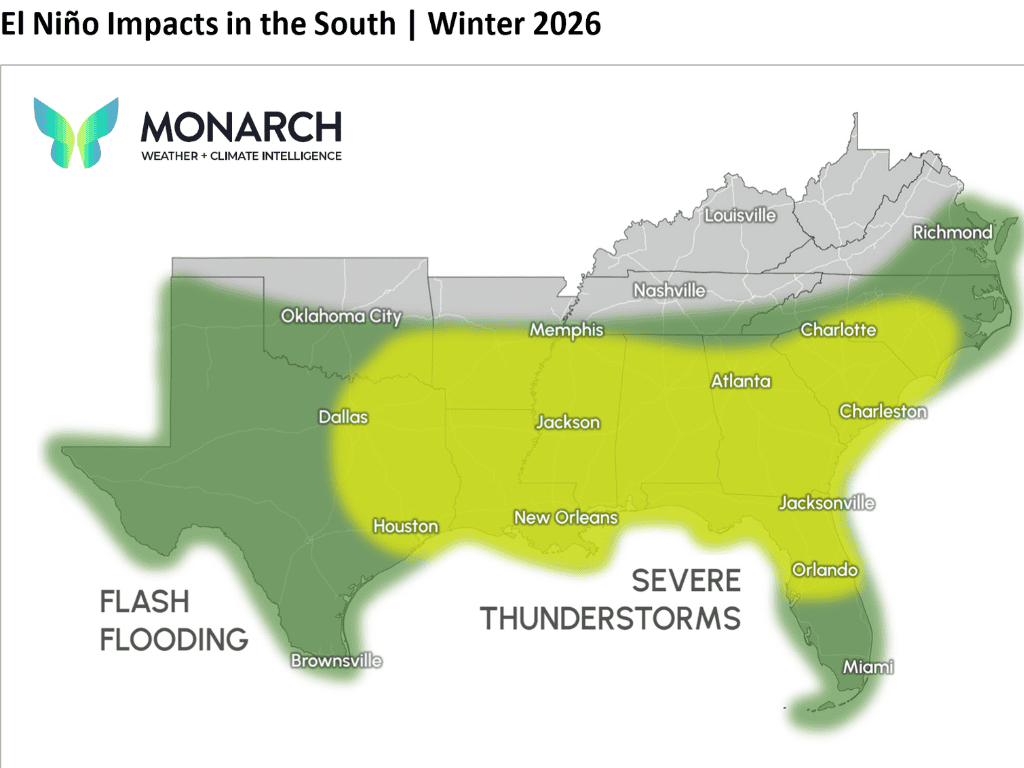
El Niño is expected to influence winter weather across the Southeast this season, increasing the likelihood of wetter-than-average conditions and stormier weather. For homeowners in Georgia and across the Southeast, that means now is a good time to prepare for heavy rain, flooding, damaging winds, hail and severe thunderstorms.
The Chubb regional resource, with weather intelligence prepared by Monarch Weather & Climate Intelligence LLC, notes that El Niño winters typically bring wetter, stormier conditions to the Southeast and Florida, raising concerns about flooding, severe weather and wind damage.
The good news? A little preparation now can help reduce your home’s vulnerability before the next storm arrives.
What Is El Niño?
El Niño is a natural climate pattern in which warmer-than-average tropical Pacific waters influence the jet stream and shift storm tracks.
NOAA’s U.S. Winter Outlook says wetter-than-average conditions are most likely across the southern tier of the United States, including the Southeast. According to NOAA, a very strong El Niño tends to shift the jet stream southward and eastward, tilting the odds toward wetter conditions across portions of the South. [noaa.gov]
However, El Niño is a seasonal outlook, not a prediction for an individual storm. A wetter winter does not mean every week will be rainy or every homeowner will experience severe weather or flooding.
The Chubb / Monarch Weather & Climate Intelligence LLC regional resource similarly emphasizes that these conditions represent broader seasonal tendencies rather than guarantees for a particular location or individual storm.
What Could El Niño Mean for Georgia and the Southeast?
Homeowners should prepare for the possibility of a wetter winter with more frequent storm systems and periods of heavy rain. Repeated rounds of rain can contribute to saturated soil, drainage problems and flooding, particularly in areas that already have flood vulnerabilities.
NOAA’s winter outlook provides additional information about how El Niño can influence precipitation patterns across the southern United States. [noaa.gov]
Severe thunderstorms can also bring damaging winds, hail, tornadoes, lightning and flash flooding.
The National Weather Service defines a severe thunderstorm as one capable of producing hail at least one inch in diameter or wind gusts of at least 58 mph. Winds at those speeds can break large branches, knock down trees and cause property damage. [weather.gov]
For Georgia homeowners, potential winter weather risks include:
-
Heavy rainfall and flash flooding
-
Water intrusion
-
Overwhelmed drainage systems
-
Damaging winds
-
Hail
-
Fallen trees and branches
-
Tornadoes
-
Power outages
-
Roof and exterior damage
The Chubb / Monarch Weather & Climate Intelligence LLC regional resource identifies flooding, water intrusion, overwhelmed drainage systems, roof damage, fallen trees and branches, power outages, damaging winds, hail and tornadoes as concerns homeowners should consider when preparing for wetter, stormier conditions.
Which Areas of Your Home Should You Check?
Your roof, gutters, drainage, windows and nearby trees are some of the most important areas to inspect before a wetter winter.
The Chubb / Monarch Weather & Climate Intelligence LLC regional guidance recommends evaluating several of these areas as part of seasonal storm preparation.
Roof
Look for missing or damaged shingles, aging materials, deteriorated flashing and other areas where wind-driven rain could enter.
Homes with older or damaged roofs may be particularly vulnerable when strong thunderstorms and heavy rain move through.
Gutters and Downspouts
Remove leaves and debris from gutters and downspouts so heavy rainfall can move away from your home.
Ready.gov recommends clearing drains and gutters as part of preparing property for potential flooding. [ready.gov]
Drainage
Pay attention to places where water already pools after a normal rain. Repeated heavy rainfall can overwhelm drainage systems and increase problems around low-lying areas of a property.
The Chubb / Monarch Weather & Climate Intelligence LLC regional guidance identifies drainage and water intrusion as areas homeowners should evaluate when preparing for wetter conditions.
Trees
Check large trees and branches near your house, vehicles and other structures.
Severe thunderstorms are capable of producing winds strong enough to break branches and knock down trees, according to the National Weather Service. [weather.gov]
Windows and Exterior Openings
Inspect windows, doors and exterior seals for known leaks or weak areas before heavy rain arrives.
The Chubb / Monarch Weather & Climate Intelligence LLC regional resource recommends inspecting windows and addressing known leaks or weak areas as part of seasonal preparation.
Does Homeowners Insurance Cover Storm Damage?
Homeowners insurance may cover certain types of storm damage, but coverage depends on what caused the loss and the terms of your specific policy.
For example, a homeowners policy may provide coverage for certain wind or hail losses, subject to the policy’s limits, deductible and exclusions.
Flooding is different.
Most homeowners insurance does not cover flood damage. FEMA’s National Flood Insurance Program explains that homeowners insurance generally does not cover flood damage and that flood insurance is separate coverage. [floodsmart.gov]
That distinction becomes particularly important during a potentially wetter winter.
Even homes outside areas traditionally viewed as high-risk can experience flooding. Ready.gov advises homeowners to understand their individual flood risk and prepare before flooding occurs. [ready.gov]
If you’re unsure whether you have flood insurance, don’t wait for a major storm to check.
How Can You Prepare Your Home Now?
Prepare before severe weather appears in the forecast rather than waiting until a storm is on the way.
The Chubb / Monarch Weather & Climate Intelligence LLC El Niño resource recommends inspecting roofs, gutters, downspouts, drainage and windows; clearing debris from gutters and storm drains; addressing known leaks or weak areas; evaluating trees near the home; and securing outdoor structures and loose objects that could be damaged by strong winds.
Ready.gov also recommends taking steps ahead of time to understand flood risks and prepare your property before flooding occurs. [ready.gov]
Winter Storm Preparation Checklist
Before winter weather arrives:
-
Inspect your roof for damaged or missing shingles.
-
Clean gutters and downspouts.
-
Make sure water drains away from the foundation.
-
Address leaks and known water-intrusion problems.
-
Have questionable trees or large branches evaluated.
-
Secure patio furniture and other loose outdoor objects.
-
Check windows, doors and exterior seals.
-
Make sure you can receive local weather alerts.
-
Identify the safest area of your home for severe weather.
-
Review your homeowners insurance limits and deductibles.
-
Determine whether you currently have flood insurance.
-
Keep copies of important insurance documents somewhere secure.
These property-preparation recommendations are consistent with the Chubb / Monarch Weather & Climate Intelligence LLC regional guidance, which specifically recommends inspecting roofs, gutters, downspouts, drainage and windows; clearing debris from gutters and storm drains; addressing known leaks; evaluating trees; and securing outdoor objects.
Ready.gov also provides steps homeowners can take to reduce flood risks and prepare before flooding occurs. [ready.gov]
Do You Know Where to Go During a Tornado Warning?
Every household should identify a safe location before severe weather occurs.
Tornadoes can occur at different times of year, making it important for Southeast homeowners to understand severe-weather safety.
The National Weather Service recommends knowing what to do before, during and after a tornado. Don’t wait until a warning is issued to decide where everyone in your household will shelter. [weather.gov]
It is also important to distinguish between a seasonal outlook and an immediate warning. Use the El Niño outlook to prepare for the season, but follow current National Weather Service forecasts, watches and warnings when individual storms develop.
The Chubb / Monarch Weather & Climate Intelligence LLC resource similarly advises homeowners to use the seasonal outlook to prepare while continuing to monitor individual storm forecasts as weather systems develop.
Why Should You Review Your Insurance Before Winter?
An insurance review can help you understand your coverage before you actually need to use it.
Consider reviewing:
-
Your dwelling coverage limit
-
Wind and hail coverage
-
Your homeowners deductible
-
Any separate wind or hail deductible
-
Personal property coverage
-
Other structures coverage
-
Loss-of-use coverage
-
Water-related endorsements
-
Flood insurance
-
Personal liability coverage
The goal isn’t necessarily to change your policy. It’s to make sure you understand what you already have and identify potential gaps before a loss occurs.
Homeowners should pay particular attention to the difference between water damage that may be covered by a homeowners policy and flooding that requires separate flood insurance.
FEMA’s National Flood Insurance Program explains that most homeowners insurance does not cover flood damage. [floodsmart.gov]
Remember: A Seasonal Outlook Is Not a Guarantee
El Niño changes the odds of certain weather patterns, but it cannot tell us exactly which home or community will experience a major storm.
NOAA’s U.S. Winter Outlook favors wetter-than-average conditions across portions of the southern United States during El Niño conditions. [noaa.gov]
Similarly, the Chubb / Monarch Weather & Climate Intelligence LLC regional resource emphasizes that a seasonal forecast describes the overall tendencies for the season, not the weather on a particular day.
A wetter, stormier El Niño winter does not mean every storm will be severe or that every location will experience flooding. The timing, track and intensity of individual storm systems will ultimately determine where the greatest impacts occur.
Use the seasonal outlook as your reminder to prepare now and monitor individual storms as they develop.
Frequently Asked Questions
What does El Niño mean for Georgia homeowners?
El Niño can favor wetter winter conditions across portions of the Southeast. The Chubb / Monarch Weather & Climate Intelligence LLC regional resource notes the potential for wetter and stormier conditions across the Southeast and Florida, while NOAA provides information about how El Niño can shift winter precipitation patterns across the southern United States. [noaa.gov]
Does El Niño mean Georgia will definitely have severe storms?
No. El Niño describes a broader seasonal climate pattern. It does not guarantee that a particular city or home will experience flooding or severe weather.
The Chubb / Monarch Weather & Climate Intelligence LLC regional resource emphasizes the importance of viewing seasonal outlooks as broader guidance rather than predictions for individual storms or properties.
Does homeowners insurance cover flooding from heavy rain?
Most homeowners insurance does not cover flood damage. FEMA’s National Flood Insurance Program explains that homeowners insurance generally does not cover flooding and that separate flood insurance may be necessary. [floodsmart.gov]
Can severe thunderstorms damage a home?
Yes. The National Weather Service notes that severe thunderstorms can produce damaging hail and strong winds, along with other serious weather hazards. [weather.gov]
What should I check around my home before winter?
Start with your roof, gutters, downspouts, drainage, windows and nearby trees. Clear debris, address known leaks or weak areas, evaluate questionable trees and secure loose items outside.
The Chubb / Monarch Weather & Climate Intelligence LLC regional guidance recommends many of these storm-preparation steps, while Ready.gov provides additional guidance for preparing property for flood risks. [ready.gov]
When should I review my homeowners and flood insurance?
Before severe weather is approaching. Reviewing coverage early gives you time to understand your deductibles, limits and exclusions and determine whether additional coverage should be considered.
Prepare Your Home and Your Coverage
A potentially wetter, stormier winter doesn’t mean homeowners need to panic. It means now is the time to prepare.
Take care of vulnerable areas around your home, know where you’ll go during severe weather, pay attention to official forecasts and make sure you understand how your insurance responds to wind, water and flood damage.
Contact Biltmore Insurance Services, LLC to review your homeowners coverage before winter weather arrives. Our team can help you understand your current policy, review your limits and deductibles, and identify potential gaps in protection.
This article is provided for general educational purposes and does not guarantee insurance coverage or weather outcomes. Insurance coverage is subject to the terms, conditions, limits, deductibles and exclusions of the applicable policy. Follow official local and National Weather Service guidance during severe weather.
Sources
NOAA
El Niño Looms Large Over U.S. Winter Outlook
Information about El Niño and expected winter-weather patterns, including wetter-than-average conditions across portions of the southern United States. [noaa.gov]
Federal Emergency Management Agency (FEMA) / FloodSmart
National Flood Insurance Program
Flood insurance information, including the distinction between homeowners insurance and separate flood insurance. [floodsmart.gov]
Federal Emergency Management Agency (FEMA) / Ready.gov
Floods
Guidance on understanding flood risk, reducing potential property risks and preparing before flooding occurs. [ready.gov]
National Weather Service
Severe Thunderstorm Safety
Information about severe thunderstorms and related hazards, including damaging winds and hail. [weather.gov]
National Weather Service
Tornado Safety
Official tornado preparedness and safety recommendations. [weather.gov]
Chubb / Monarch Weather & Climate Intelligence LLC
Helping Southeast and Florida Clients Prepare for Increased Storm Activity: El Niño Impacts in the South | Winter 2026
Southeast-specific El Niño risk and homeowner preparation guidance, including wetter and stormier conditions, flooding, water intrusion, drainage problems, damaging winds, hail, tornadoes and steps homeowners can take to reduce vulnerabilities.
Images and content prepared by Monarch Weather & Climate Intelligence LLC, a weather intelligence provider to Chubb, for informational purposes only.